
The Evidence for Longevity Dynamics
Aging follows a sequence.
So we can address it in the right order.
Hitting a single cause won't stop the cascade — skin ages through six intertwined pathways.
Read more +Close −
Removing senescent cells. Promoting single ingredients. Waving bold slogans. The major brands are planting their flags one after another. But every one of them addresses only a single aspect of aging. Understanding these six pathways is where real skin longevity begins.
The basis of this view — CHROSNOF
Our own computational model of skin aging. It expresses in equations how fast each of the six pathways advances and how they affect one another — and, like a weather forecast, calculates which way your skin is likely to lean.
01 — AGING CASCADE
Six links. Skin ages in this order.
- 01 · Seconds–minutesAvailable
RROS (Reactive Oxygen Species)
The origin of the cascade. When this goes unchecked, everything begins.
“Rust”Dullness, roughnessRead more +Close −
Reactive oxygen species (ROS), generated by UV exposure, stress, and environmental pollution, oxidize cells and DNA. This is the trigger that initiates the entire skin aging cascade. Controlling ROS means cutting the chain of aging at its root.
- 02 · Hours–daysIn Development
IChronic Inflammation
A slow fire ignited by ROS. The skin deteriorates before you notice.
“A smouldering fire”Redness, sensitivityRead more +Close −
When ROS accumulates, chronic low-grade inflammation takes hold inside the skin. Inflammation is also the breeding ground for senescent cells. Controlling the inflammation that produces senescent cells is a more fundamental approach than removing them after the fact.
- 03 · Days–weeksAvailable
BBarrier function
The smouldering fire opens gaps in the epidermal wall.
“Gaps in the wall”Dryness, tightnessRead more +Close −
Chronic inflammation and oxidative stress loosen the skin's outermost "wall" — the cells of the stratum corneum and the lipids that fill the spaces between them. Moisture escapes through the gaps, and irritants get in more easily. Dryness and tightness are the first signs. On skin whose barrier isn't working, even the most expensive ingredients can do only so much.
- 04 · Months–yearsIn Development
FMMP, fibroblasts & collagen
Inflammation activates the enzymes that dismantle the skin's scaffolding.
“An unravelling net”Loss of firmness, saggingRead more +Close −
Chronic inflammation activates MMPs (matrix metalloproteinases)—enzymes that break down collagen and elastin, dismantling the structural scaffolding of the skin. Simultaneously, fibroblasts, the cells responsible for producing collagen, begin to lose their function. As collagen is lost, firmness and elasticity decline, showing up as wrinkles and sagging.
- 05 · YearsIn Development
AAGEs (Advanced Glycation Endproducts)
The skin stiffens with accumulation. Once formed, AGEs do not reverse.
“Scorch”Yellowing, stiffnessRead more +Close −
AGEs, formed when sugars bind to proteins, crosslink and harden collagen fibers. Dullness, loss of elasticity, and an aged appearance are in large part caused by AGE accumulation. Prevention and suppression are the only strategies.
- 06 · DecadesIn Development
SSenescent-Cell Accumulation
Here the chain closes into a loop. The accumulated burden pushes the upstream back up.
“Old cells that linger”Sparks spread around themRead more +Close −
Oxidative stress (R), inflammation (I), and ageing itself increase the cells that remain in the tissue after they have stopped dividing. These cells release inflammatory substances and scatter enzymes that break down collagen, and the increased burden drives reactive oxygen species further up. The chain closes into a loop here. CHROSNOF treats this accumulating quantity as an independent axis and calculates it together with its effects on the other five axes.
After 06, the cascade returns to 01.
02 — RATE & STOCK
How fast it flows, and how much has built up.
03 — FABIRS FRAMEWORK
Six axes. One structure. Managed together.
Which pathway advances in which layer? Here is how it looks in a cross-section of skin.
Fibroblast
In DevelopmentAnti-Glycation
In DevelopmentBarrier
AvailableInflammation
In DevelopmentAntioxidation
AvailableSenescence Control
In Development
04 — S AXIS / SENESCENCE CONTROL
S is a hub that branches into the other axes.
What are senescent cells?
As we age, cells that have stopped dividing but remain in the tissue — senescent cells — gradually accumulate. These cells release inflammatory substances and scatter enzymes that break down collagen, which is known to affect the healthy tissue around them.
S is a hub
S has branches both upstream and downstream. Oxidative stress (R), inflammation (I), and ageing itself increase S, and the increased S in turn drives R further up. This two-way loop is something CHROSNOF's calculations treat with particular care.
Why a separate axis?
Because the substances senescent cells release are inflammatory cytokines, they appear to overlap with inflammation (I) at the level of observation. To avoid counting the same thing twice, CHROSNOF draws a clear line between the layers: S is the burden on the cell side, I is the concentration on the secretion side.
Patent pending (JP 2025-285457)
The effect of topical application on senescent cells in human skin is an area where verification is still in progress. CHROSNOF treats S as an axis within its calculations and makes no numerical claim regarding the amount of senescent cells or any end state.
05 — LINEUP & ORDER
The line-up, and the order of use.
Stop the fire and rust. Mend the wall. Reweave the net.
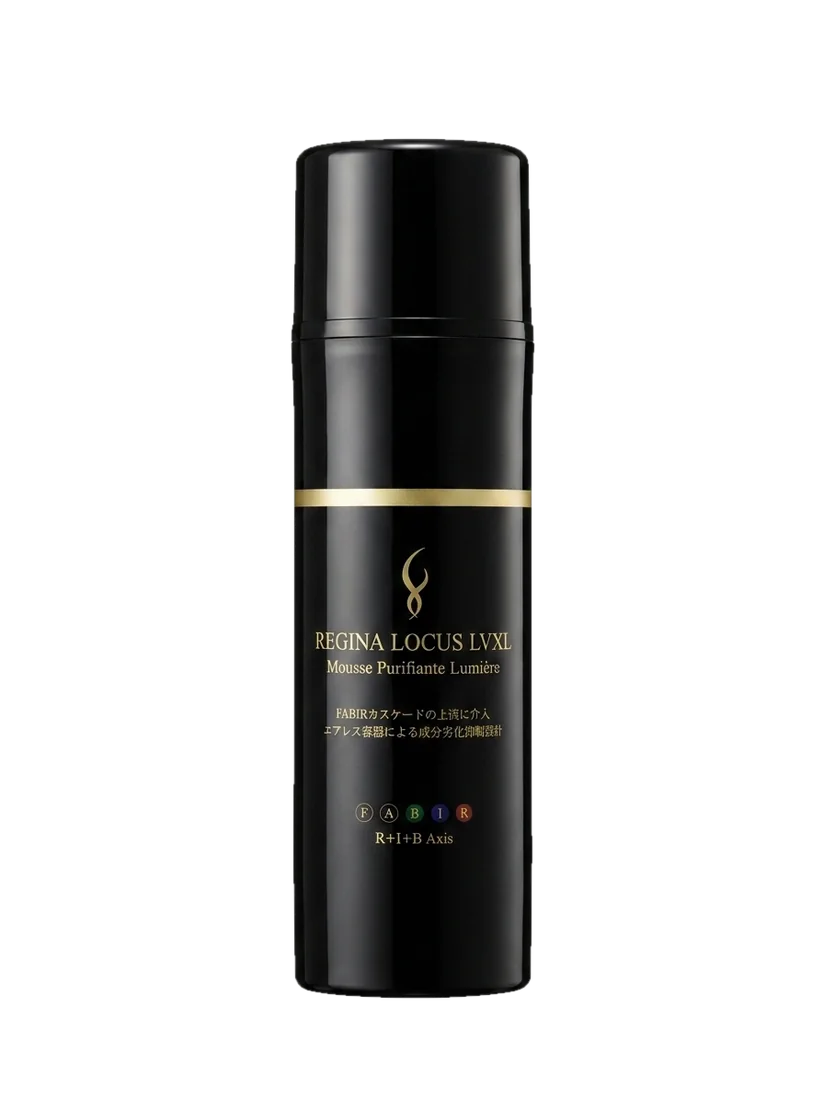
- In developmentSTEP 1
Essence Sérénité Profonde
Essence
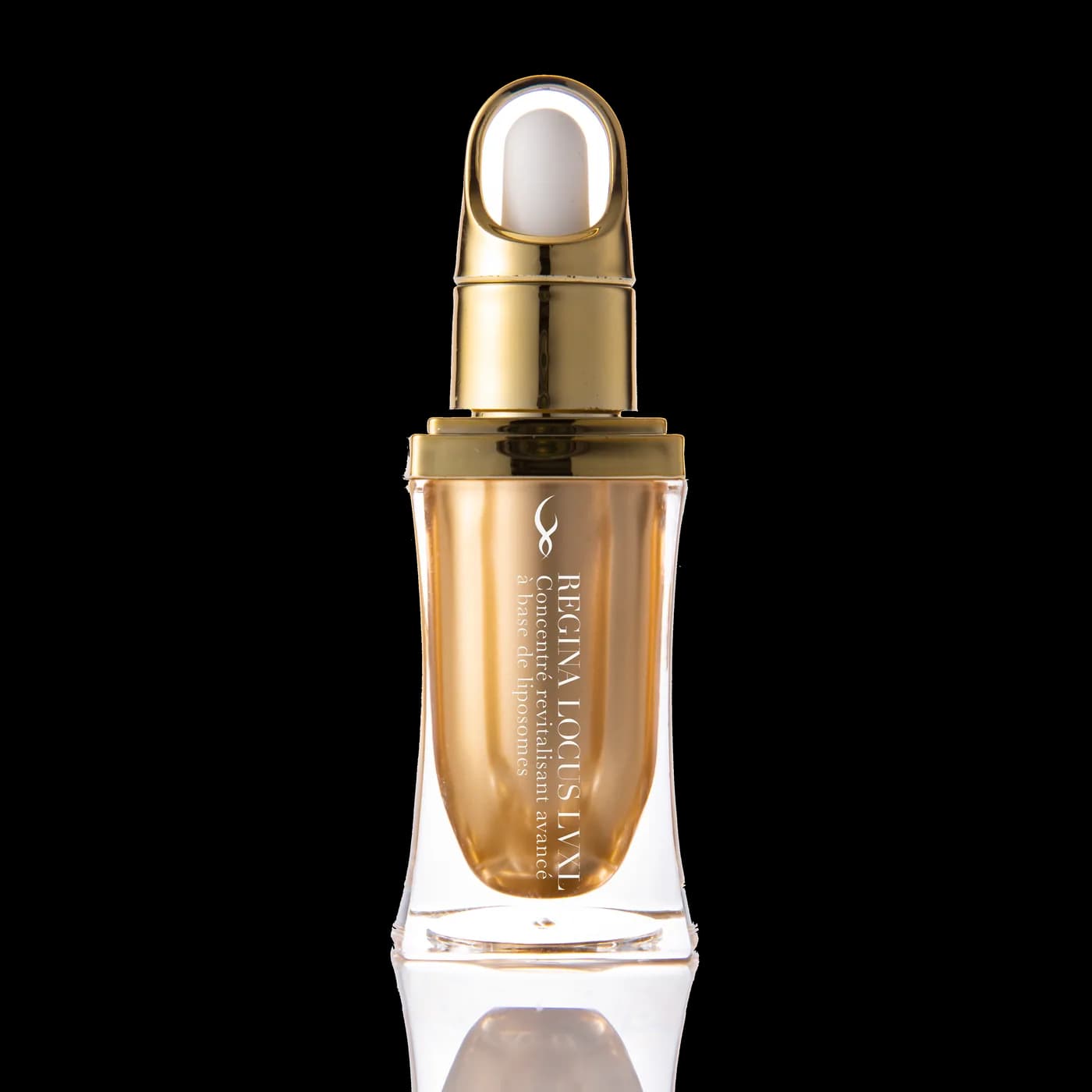
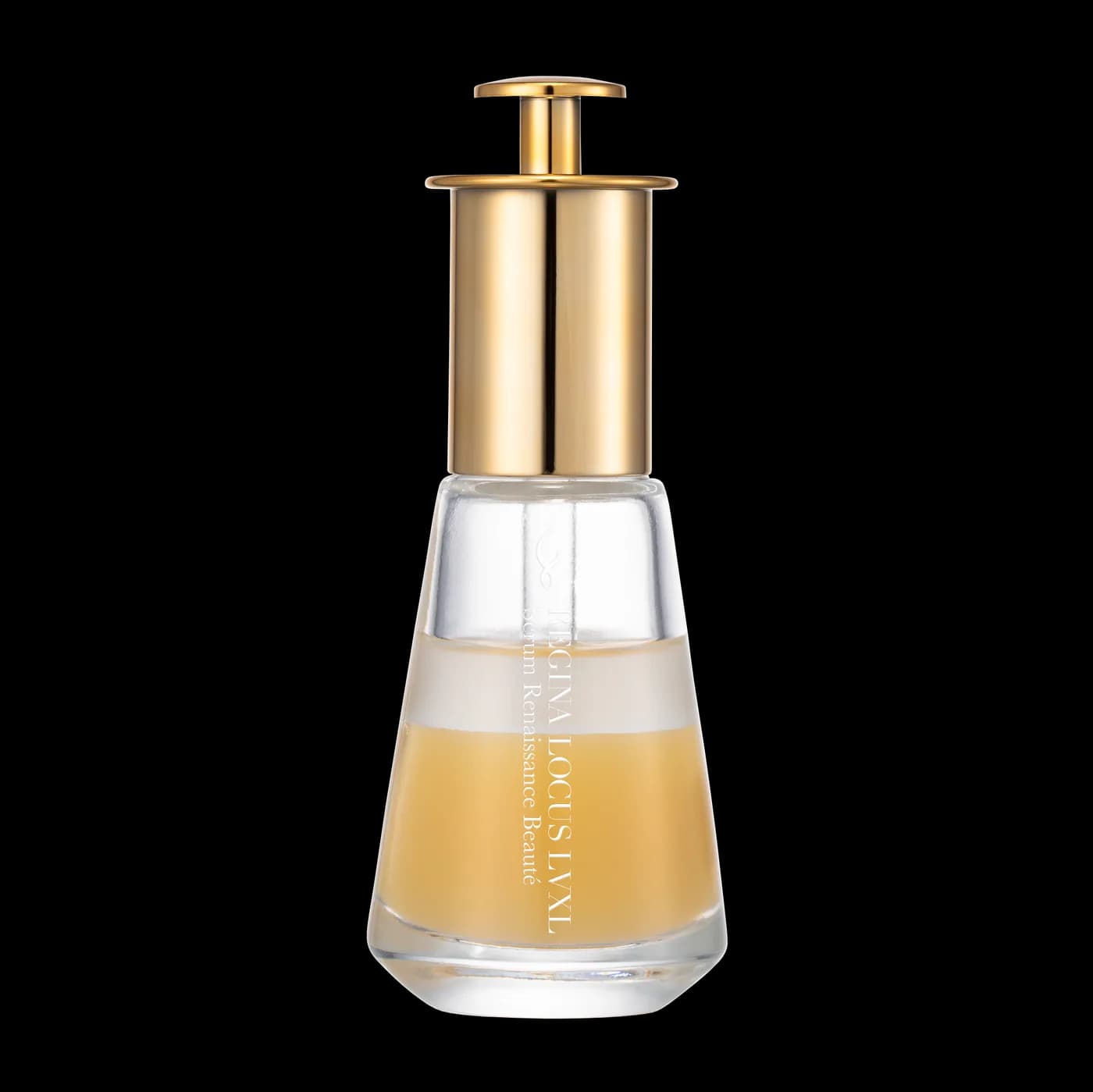
- In developmentSTEP 3
Crème Régénération Temporelle
Cream
- In development+ INNER
Tisane Lumière Intérieure
Inner Tisane
06 — OUR APPROACH
Upstream control, not downstream cleanup.
Rather than extinguishing the fire, we create conditions where fires are less likely to start.
Read more +Close −
Senolytics—the removal of senescent cells—has attracted significant attention. Senescent cells trigger chronic inflammation (SASP) and damage surrounding cells. The approach itself has scientific merit.
But we ask: why do senescent cells form? The answer is chronic inflammation and ROS. What REGINA LOCUS LVXL chose was to address the very cause that gives rise to senescent cells. Rather than extinguishing the fire, we create conditions where fires are less likely to start. This is what we call skin longevity.
Understand the six pathways. Then choose.
Know which pathways our three current formulations address, and which are coming next.
FABIRS — what the six letters stand for
- F — Fibroblast / 線維芽細胞活性化
- A — Anti-Glycation / 抗糖化
- B — Barrier / バリア強化
- I — Inflammation / 抗炎症
- R — Antioxidation / 抗酸化
- S — Senescence Control / 老化細胞の蓄積抑制